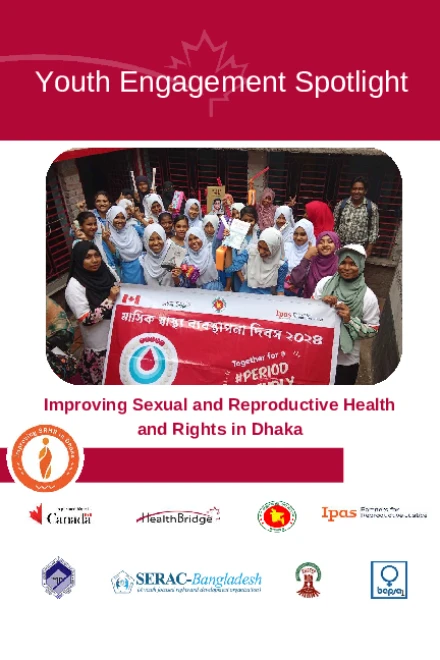
Project
Description
This project was implemented in underserved urban areas of Dhaka and addressed barriers to sexual and reproductive health and rights (SRHR) faced by marginalized populations. The project focused particularly on adolescents, unmarried women, and Ready-Made Garment (RMG) factory workers, who faced significant challenges and discrimination in accessing the full range of sexual and reproductive health services to which they were entitled, including contraceptive services and safe abortion, referred to as menstrual regulation in Bangladesh.
The project aimed to improve SRHR by increasing access to quality sexual and reproductive health services, addressing social and gender-based barriers to SRHR, and strengthening referral pathways for survivors of sexual and gender-based violence (SGBV). It used a multi-pronged approach to achieve these objectives.
First, the project strengthened health workers’ skills and capacity to provide gender-sensitive sexual and reproductive health services across 162 sites, including health clinics, general practitioner practices, and health facilities located within garment factories. Second, through community-based approaches, the project addressed behaviours and social attitudes related to gender and SGBV. It also worked to reduce stigma surrounding sexual and reproductive health services and increased awareness of how to access contraception, safe abortion, and post-abortion care. Finally, the project adopted a health-systems strengthening approach, working with government agencies and authorities to improve service delivery, coordination, and referral mechanisms.
Project
Expected Results
The project aimed to improve sexual and reproductive health and rights in underserved urban settlements in Dhaka. The project sought to achieve the following results:
- Increased use of sexual and reproductive health services that uphold the rights of women and adolescent girls.
- Improved availability and accessibility to quality sexual and reproductive health services for women and adolescents living in poor urban areas.
- Increased social support, knowledge, self-efficacy related to SRHR, including SGBV resources for women and adolescents.
- Improved public health emergency preparedness and response to ensure uninterrupted access to essential SRH services during public health emergencies, including pandemics such as COVID-19.
Project
Achieved Outcomes
The project contributed to significant improvements in access to, quality of, and demand for SRHR services among women, adolescent girls, and other underserved populations in urban communities.
The results demonstrate increased access to modern family planning methods, improved knowledge of SRHR, and greater ability among women and adolescent girls to make informed reproductive health decisions.
Greater than 700,000 SRH services were provided through project-supported facilities, substantially expanding access to essential SRHR services for underserved urban communities.
The project also strengthened the capacity of health service providers and community-based actors. 755 service providers received competency-based training on comprehensive SRH and SGBV services. A further 1,510 youth volunteers and 296 outreach workers were oriented and trained on SRH and SGBV, and social and behaviour change communication (SBCC), enabling them to promote healthy SRH behaviours and connect communities with appropriate services.
Community engagement and awareness activities reached a large number of people. 34,996 people participated in community and school sessions and edutainment activities, while outreach workers reached approximately 1.048 million people through community sessions and door-to-door visits. The project's digital platforms reached a further 1.75 million people, expanding access to SRHR information beyond direct project beneficiaries.
The project substantially expanded the availability of SRH services. The number of facilities and providers offering project-supported SRH services increased from 46 at baseline to 162 by the end of the project, including referral centres, Comprehensive Reproductive Health Care Centres (CRHCCs), Primary Health Care Centres (PHCCs), garment factory clinics, and general practitioners (GPs).
The proportion of assessed service delivery sites meeting minimum SRHR quality standards increased from 13% at baseline to 75% at endline. Similarly, the proportion of women reporting that they received quality SRH counselling increased from 85% to 97%.
A Public Health Emergency Preparedness and Response Plan and contingency plan were developed to support uninterrupted delivery of essential SRH services and supplies. By the end of the project, 100% of the 63 assessed health facilities were prepared to provide SRH services during public health emergencies, compared with 38% at baseline.

Project
Publications
Sexual and Reproductive Health and Rights: The example of Dhaka
Sexual and Reproductive Health and Rights: Increasing access to services
Sexual and Reproductive Health and Rights: Improving service delivery

Sexual and Reproductive Health and Rights: Strengthening health systems
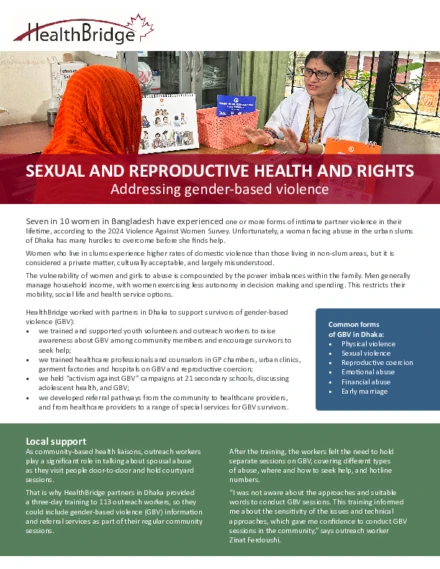
Sexual and Reproductive Health and Rights: Addressing gender-based violence
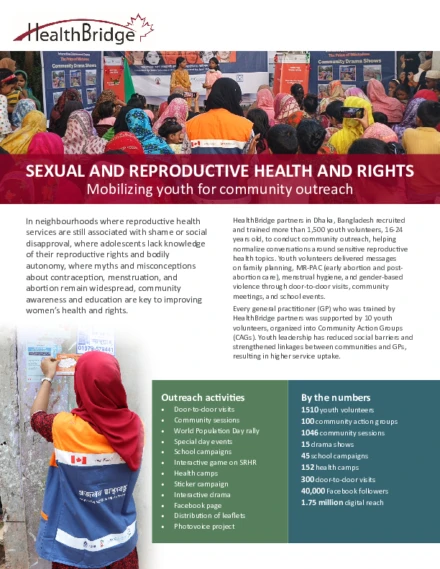
Sexual and Reproductive Health and Rights: Mobilizing youth for community outreach
Project
Reports
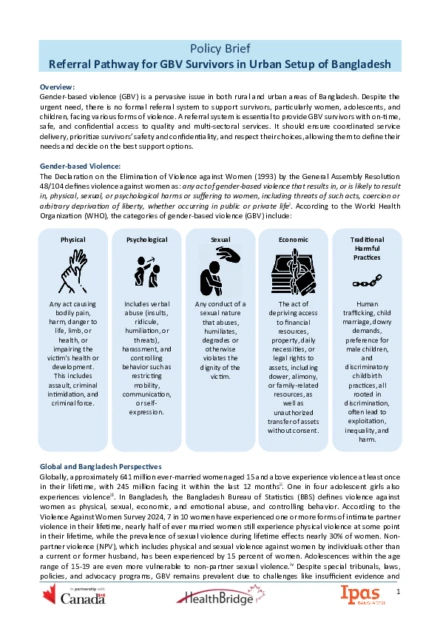
Policy Brief: Referral Pathway for GBV Survivors in Urban Setup of Bangladesh
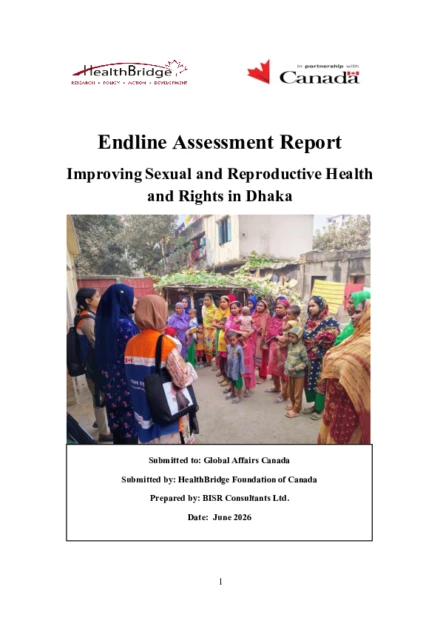
Endline Assessment Report: Improving Sexual and Reproductive Health and Rights in Dhaka
Endline Report: Health Facilities Assessment — Improving Sexual and Reproductive Health and Rights in Dhaka