Details
In Dhaka, Bangladesh’s densely populated capital city, accessing basic health care can be challenging, especially for women and girls living in low-income and underserved areas where the health system is difficult to navigate. Many women don’t know where to go or what their options are when it comes to family planning. They may also fear they will face judgment when trying to access information about contraception.
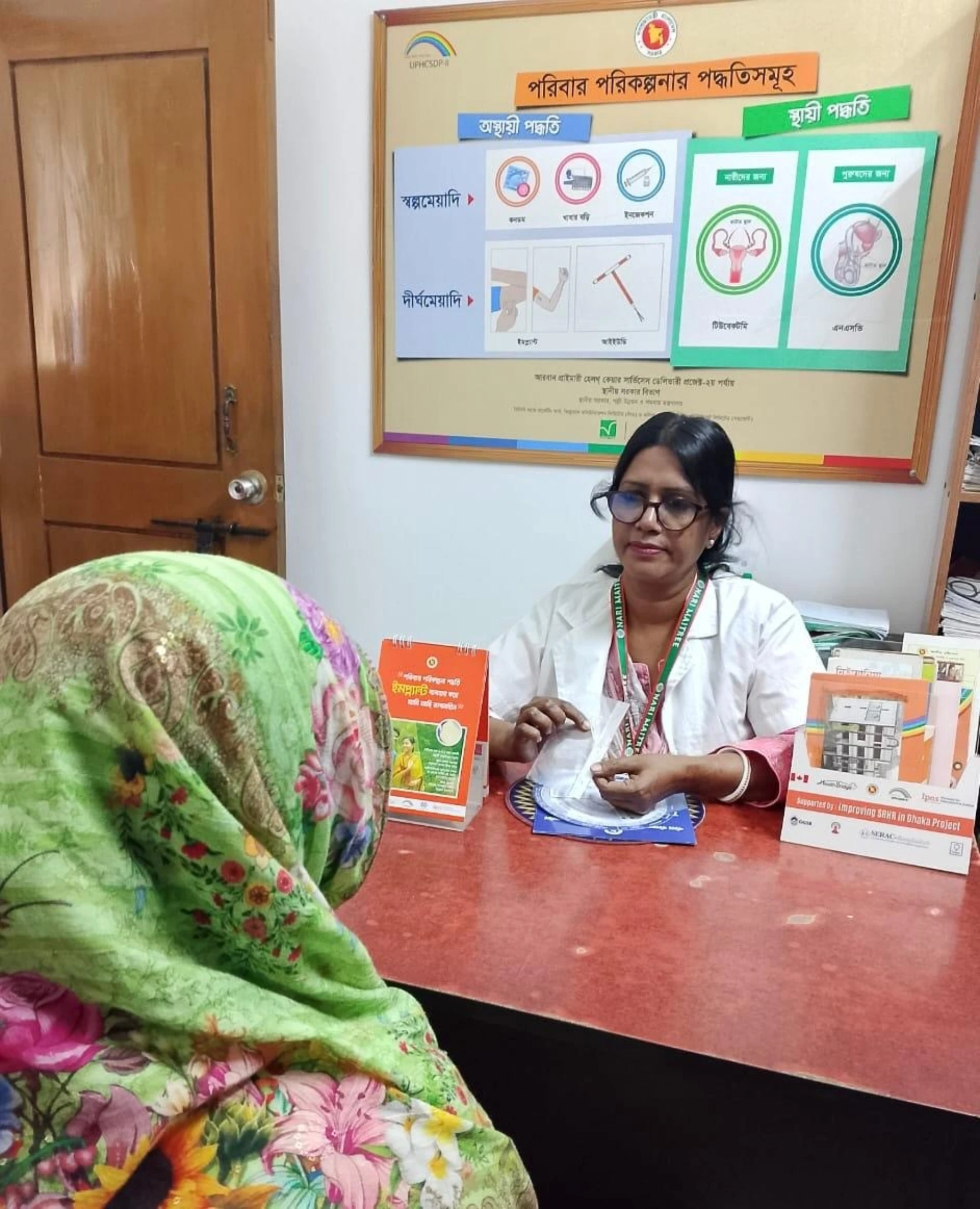
The Improving Sexual and Reproductive Health and Rights (SRHR) in Dhaka project is improving access to family planning in underserved areas through community-based approaches and health system strengthening. At urban clinics, the project has been training health workers to provide personalized and client-centred counselling on contraception using flip charts, models, and other aids to help patients understand the best options based on their medical history and personal needs. These efforts make it easier for women to make informed, confident choices about their reproductive health.
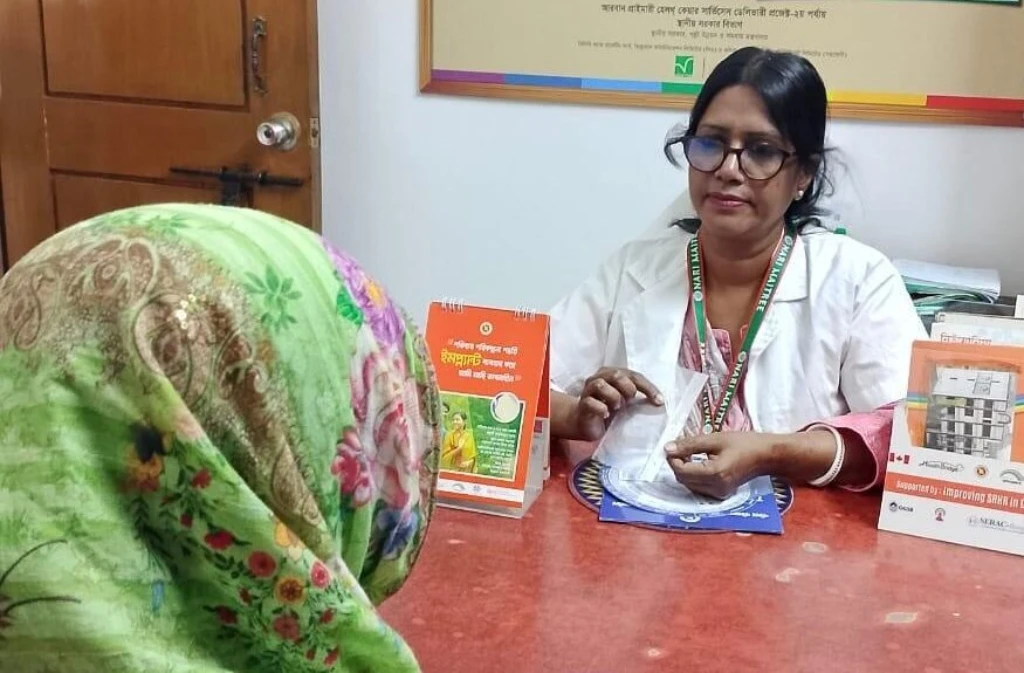
Shabnur (anonymized name), a 23-year-old mother, became pregnant unexpectedly after missing her birth control injection during a family crisis. Afraid to try a new method, she went without contraception and later gave birth to her second daughter. Wanting to avoid another unintended pregnancy, Shabnur spoke to a community volunteer who referred her to a nearby urban clinic. During her visit, a project-trained health worker listened to her concerns and explained all her options clearly. She chose a contraceptive implant, which will protect her from pregnancy for three years. She said the support she got made a big difference.
“I used to be very scared about all these procedures,” Shabnur said, “But the way you [the health worker] explained everything to me made all my fears go away. Now I feel much better.”
Shabnur’s story reflects the broader impact of the Improving Sexual and Reproductive Health and Rights (SRHR) in Dhaka project. By making family planning services more accessible and respectful, the project helps women protect their health and plan for the future. Referrals from community volunteers and supportive counselling from health care workers give women the confidence to take control of their reproductive choices. Shabnur now feels happy about her decision and hopes to share what she learned with other women in her community.
Access to client-centered informed reproductive health care helped Shabnur avoid another unintended pregnancy and gave her peace of mind. Her story reflects the power of accessible, community-linked SRHR care in shaping healthier futures for women and families across Dhaka.