Project
Description
The goal of this project was to improve access to and quality of reproductive health services for adolescent girls and women of reproductive age in the Kalikot district of Nepal and the Son La province of Vietnam. Working closely with local partners, International Nepal Fellowship (INF) in Nepal and CDC Son La in Vietnam, the Project aimed to improve health and gender equality (GE) among adolescent girls and women as well as reduce the incidence of child marriages, a form of sexual and gender-based violence (SGBV). The Project took an integrated and holistic approach to empower local adolescent girls and women to exercise their reproductive rights and ensure access to health and reproductive services when needed.
Project
Expected Results
Improved reproductive health and reduced incidence of child marriage in target communities through increased agency of women and girls and increased utilization of quality, gender-sensitive and inclusive health services by adolescent girls and women.
Increased knowledge and improved attitudes among community champions, women & men on the importance of timely and appropriate health services, including sexual and productive health (SRH) services, and gender equality, sexual and reproductive health and rights (SRHR) and the impacts of SGBV;
Enhanced knowledge & skills among adolescent girls and boys in schools and the community related to comprehensive rights-based & evidence-based sexuality and relationship education;
Improved health facilities for women of reproductive age and adolescent girls and boys including protocols, equipment, resources and supplies;
Increased capacity of services providers and government health staff to deliver quality, gender-responsive and inclusive health services, including SRH services, for women of reproductive age and adolescent girls & boys.
Project
Achieved Outcomes
The project achieved a number of important outcomes including improved access to and utilization of quality sexual, reproductive, maternal and child health (SRMCH) services, improved knowledge and attitude among men and women in the community and adolescents on the importance of timely and appropriate health services, including SRH services, gender equality, SRHR and the impacts of SGBV and improved confidence among women and girls about making decisions related to SRMCH.
In both Nepal and Vietnam, health facilities were improved and provided with equipment and supplies. In Nepal, three Basic Health Service Centres were upgraded into birthing centres, thus increasing the number of birthing centres in the region from two to five.
In both Nepal and Vietnam health workers received training such as skilled birth attendant training and implant training to improve the range and quality of SRMCH services they deliver.
The number of women and adolescent girls who utilized key SRMCH services such as antenatal care and postnatal care increased in both counties.
Women and adolescent girls in Vietnam reported improved confidence in making decision about SRMCH such as feeling confident to actively seek information and services related to SRH and feeling confident to ask their partner to use birth control.
Knowledge and attitudes among men and women in on a number of SRMCH topics improved in both countries including knowing the appropriate number of antenatal care visits and the importance of supporting women during their pregnancies.
Improved knowledge and attitudes among adolescents in both countries on a number of SRHR topics such as knowledge about conception, contraception and the legal age of marriage.

Project
Publications

Understanding the roots: Local stakeholders’ insights on the causes and challenges in combating child marriage in mountainous Karnali, Nepal
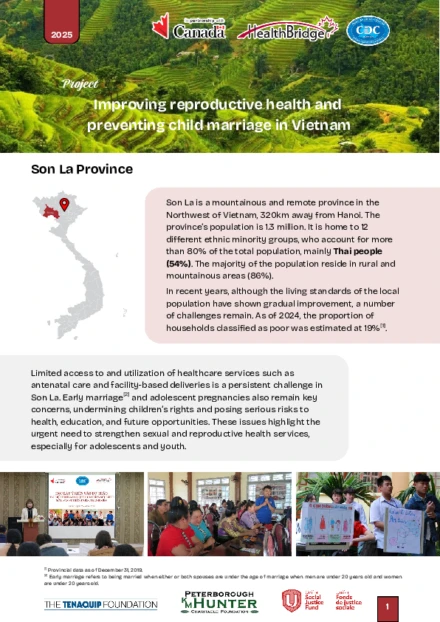
Brief: Improving reproductive health and preventing child marriage in Vietnam

Brief: Improving reproductive health and preventing child marriage in Nepal

Infographic: Comprehensive Sexuality Education (CSE) Improves Knowledge and Confidence Among Youth
Project
Reports

Improving Reproductive Health & Preventing Child Marriage in Nepal and Vietnam: Vietnam Midline Check-in
